

Electronics & Computers · buying guide
How to Choose a 4-Port USB-C Hub With Power Delivery
A host-port and power audit with three distinct USB-C hubs compared by port mix, shared bandwidth, charging overhead, and compatibility.
Verdict: choose a hub only after matching it to your computer’s verified port capabilities and your simultaneous workload. A data hub can add peripherals, but charging pass-through and external-display output require compatible host hardware and a hub designed for those functions.
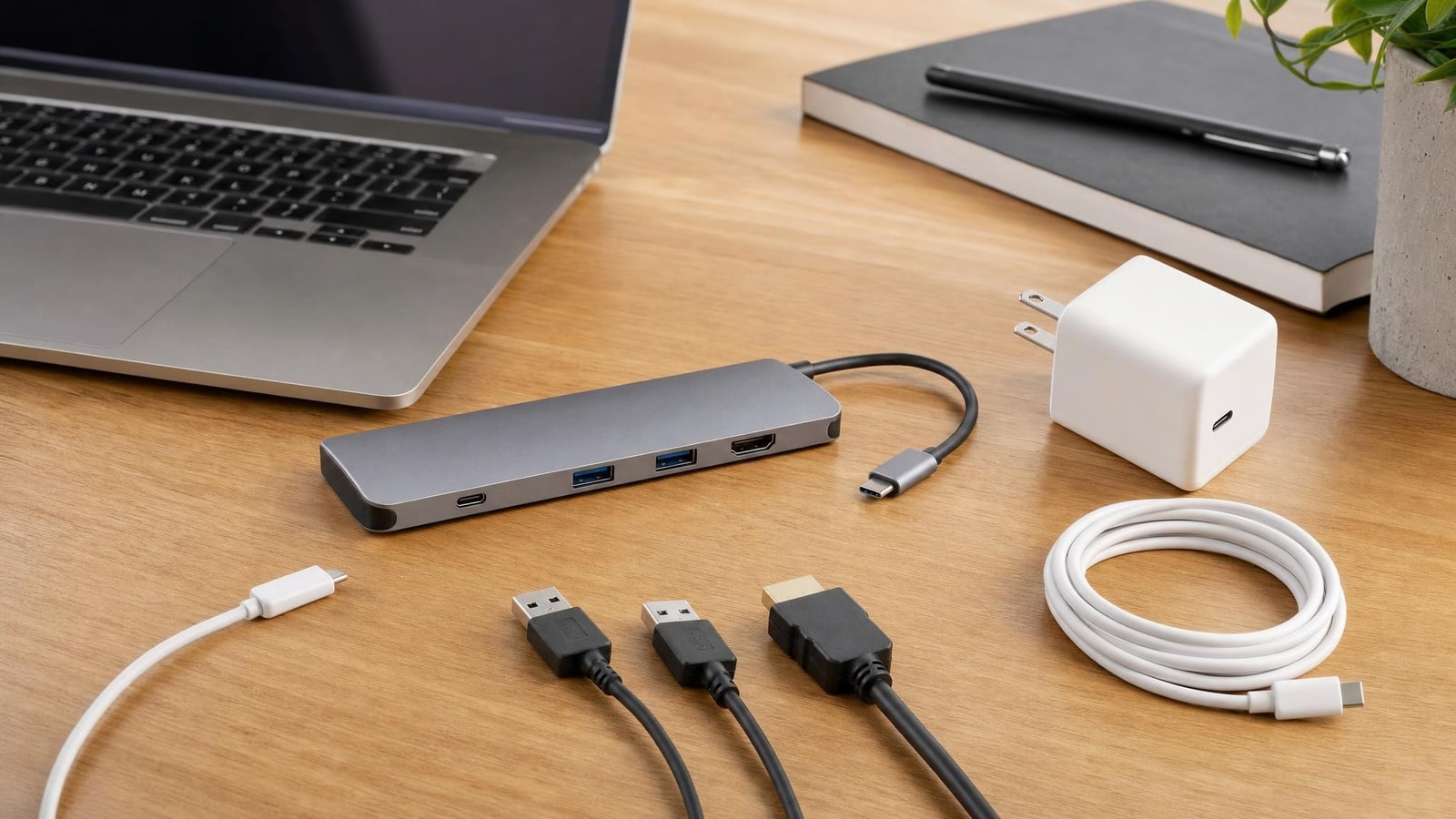
Quick product guide
Products featured in this guide
Baseus 8-in-1 USB-C hub
Best for: A desk or travel setup needing broader connectivity from one verified host port.
Limitation: More simultaneous connections increase shared-bandwidth, charger, cable, and heat constraints.
View on AmazonUGREEN 5-in-1 USB-C hub
Best for: Users whose cable orientation and adjacent-port access differ from the first hub.
Limitation: Compatibility still depends on the exact computer port, charger, cable, and display.
View on AmazonSabrent 5-in-1 USB-C hub
Best for: A small travel or desk kit prioritizing fast data alongside HDMI and power delivery.
Limitation: Real throughput shares host bandwidth and depends on every cable and connected device.
View on AmazonCompare the fit, not a generic ranking
| Option | Best for | Strongest benefit | Main limitation |
|---|---|---|---|
| Baseus 8-in-1 USB-C hub | A desk or travel setup needing broader connectivity from one verified host port. | The expanded port mix addresses a different workflow from a minimal five-port hub. | More simultaneous connections increase shared-bandwidth, charger, cable, and heat constraints. |
| UGREEN 5-in-1 USB-C hub | Users whose cable orientation and adjacent-port access differ from the first hub. | It provides a distinct physical layout and power specification to verify against the host. | Compatibility still depends on the exact computer port, charger, cable, and display. |
| Sabrent 5-in-1 USB-C hub | A small travel or desk kit prioritizing fast data alongside HDMI and power delivery. | Its use case differs by emphasizing data-path requirements, not merely adding another similar card. | Real throughput shares host bandwidth and depends on every cable and connected device. |
On a narrow screen, swipe the table sideways to compare every column.
Buying criteria
Build a fit plan before opening a listing
Verify the host port before choosing a hub
Confirm what your computer’s specific port supports, not just its connector shape. Check whether it accepts USB-C charging input, supports external video, and has the data capability needed for your devices. A USB-C-shaped port does not automatically provide every function.
List the workload that must run together
Make one list of devices that must be connected at the same time: charger, display, keyboard, mouse, storage, network adapter, and other accessories. Count ports by connector type and include any adapters you already need. Avoid choosing based only on the largest port count.
Calculate power separately from ports
Start with the computer’s normal charging requirement, then account for power used by connected accessories. If you need the computer to charge through the hub, use a USB-C hub with power delivery only when the host supports charging through that port. A data-only hub cannot add charging capability.
Separate display needs from data expansion
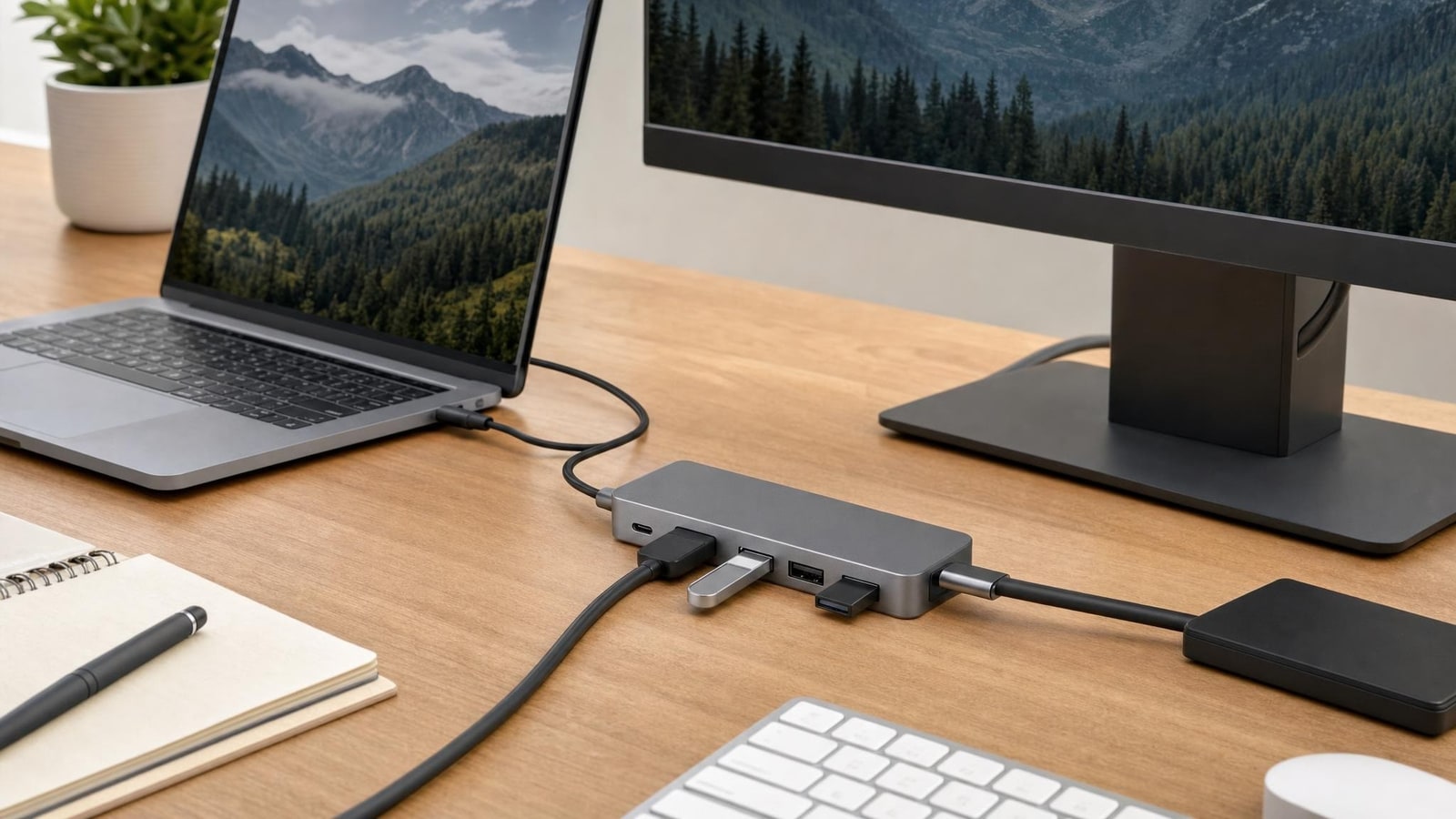
If an external display is required, verify both the computer’s video output support and the hub’s display-output function, then use a cable compatible with the display. For keyboard, mouse, and similar accessories only, a data-only USB hub may be sufficient. The Anker four-port USB data hub is the data-expansion option; it is not an alternative for display output or USB-C charging.
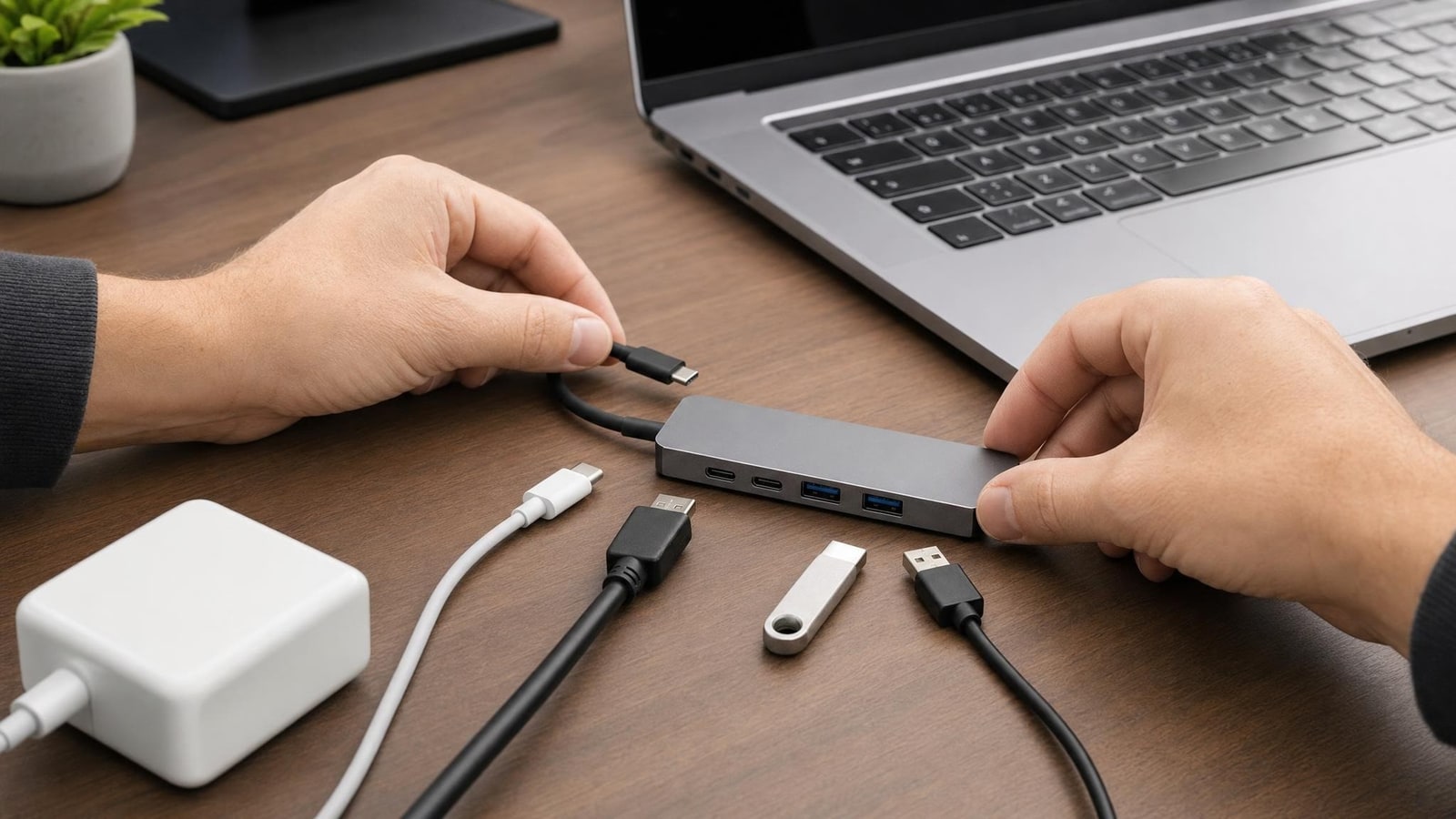
Connect and test the complete setup
Connect the hub directly to the computer, attach power if applicable, then add the display and peripherals. Test charging, display detection, storage transfers, and all accessories together under normal use. Keep the setup simple while diagnosing problems: remove nonessential devices, test one connection at a time, and retest the full workload before the return window ends.
Recommendations in detail
Match each option to a measured problem
Recommendation 1
Baseus 8-in-1 USB-C hub
A multiport hub when HDMI, Ethernet, card access, USB data, and pass-through power are required.
- Best for
- A desk or travel setup needing broader connectivity from one verified host port.
- Strongest benefit
- The expanded port mix addresses a different workflow from a minimal five-port hub.
- Main limitation
- More simultaneous connections increase shared-bandwidth, charger, cable, and heat constraints.
Pros, cons, evidence, and when to skip
Skip if
- You need only four data ports or your host cannot support the required display and charging modes.
Evidence references: Current Lasso product-data identity, tagged destination, and authorized exact-product media readiness were verified for Baseus 8-in-1 USB-C hub.
Recommendation 2
UGREEN 5-in-1 USB-C hub
A second compact HDMI-and-PD hub format for comparing port layout and host fit.
- Best for
- Users whose cable orientation and adjacent-port access differ from the first hub.
- Strongest benefit
- It provides a distinct physical layout and power specification to verify against the host.
- Main limitation
- Compatibility still depends on the exact computer port, charger, cable, and display.
Pros, cons, evidence, and when to skip
Skip if
- You need Ethernet, card readers, or more display outputs than this class provides.
Evidence references: Current Lasso product-data identity, tagged destination, and authorized exact-product media readiness were verified for UGREEN 5-in-1 USB-C hub.
Recommendation 3
Sabrent 5-in-1 USB-C hub
A higher-data-rate compact hub candidate for workflows where external storage is central.
- Best for
- A small travel or desk kit prioritizing fast data alongside HDMI and power delivery.
- Strongest benefit
- Its use case differs by emphasizing data-path requirements, not merely adding another similar card.
- Main limitation
- Real throughput shares host bandwidth and depends on every cable and connected device.
Pros, cons, evidence, and when to skip
Skip if
- Your host, enclosure, or cable cannot support the required data mode.
Evidence references: Current Lasso product-data identity, tagged destination, and authorized exact-product media readiness were verified for Sabrent 5-in-1 USB-C hub.
Alternatives and no-buy options
When none of these products is appropriate
- Use the no-purchase baseline described in this guide before adding another how to choose a 4-port usb-c hub with power delivery product.
- Borrow or use an existing tool for one representative week and count setup, cleanup, storage, and compatibility as part of the decision.
Final recommendation
Choose the smallest system that solves the measured problem
Use the no-buy baseline first, then choose only the format whose tradeoffs fit the recurring task.
View on Amazon