

Kitchen & Coffee · buying guide
Burr Grinder vs. Blade Grinder: Which Fits Your Routine?
A routine-first comparison of two burr-grinder formats and one blade grinder, including repeatability, capacity, cleanup, and footprint.
Verdict: choose a new coffee grinder only if your current one cannot produce a repeatable grind for the brew methods you actually use. This process helps identify whether technique, cleaning, adjustment range, or grinder format is the limiting factor before comparing countertop and portable burr options.
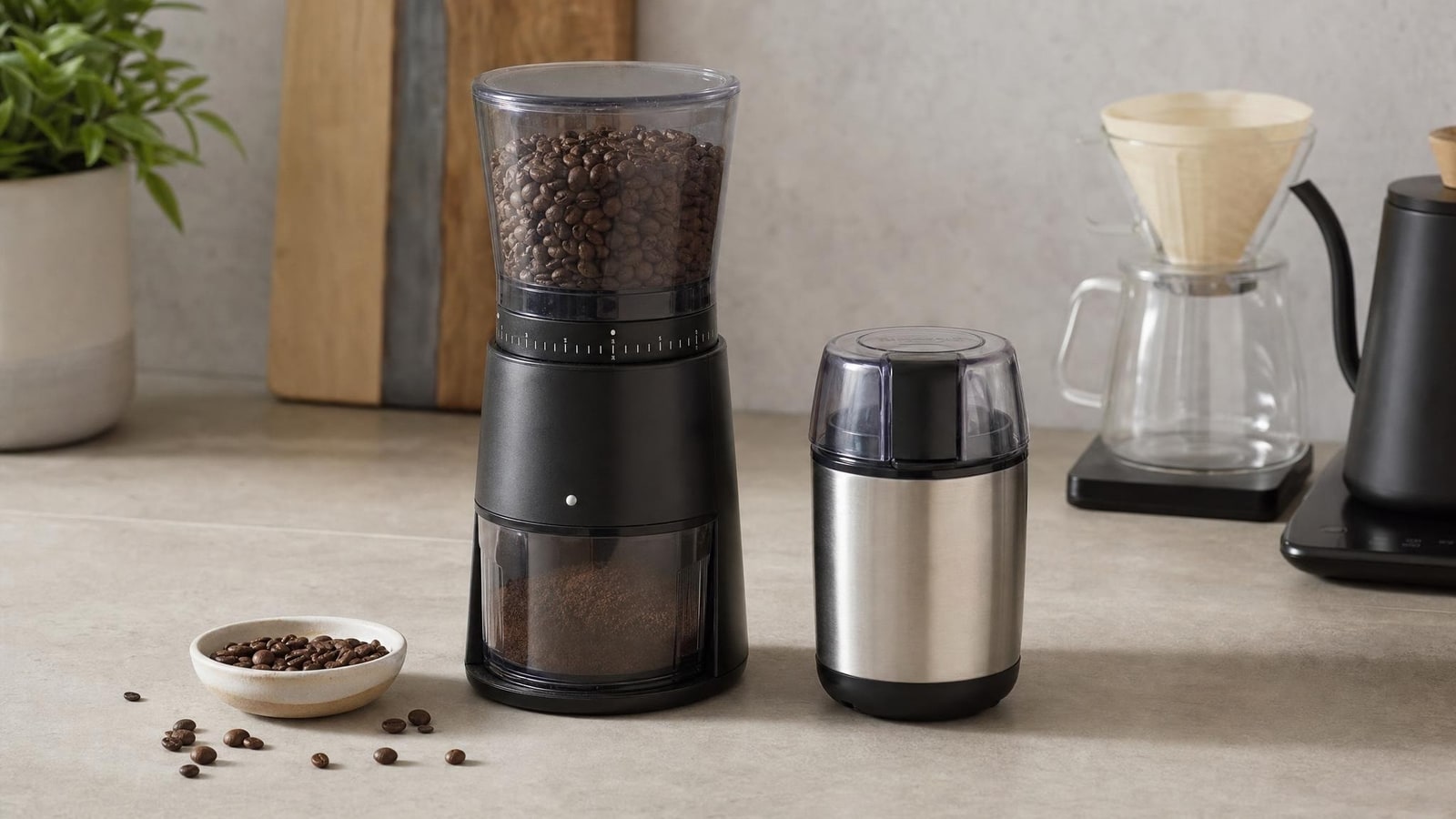
Quick product guide
Products featured in this guide
AMZCHEF conical burr coffee grinder
Best for: A fixed coffee station where selectable grind settings justify the footprint.
Limitation: The countertop body requires dedicated space and retained-setting cleanup.
View on AmazonFellow Ode Gen 2 flat burr grinder
Best for: A countertop setup prioritizing repeatable filter-grind adjustment and low retained dose.
Limitation: The countertop format and filter-focused range are a poor fit for occasional or blade-style simplicity.
View on AmazonHamilton Beach Fresh Grind electric coffee grinder
Best for: Occasional users comparing compact blade operation with burr adjustment.
Limitation: Blade timing produces a less controlled particle-size distribution and needs user judgment.
View on AmazonCompare the fit, not a generic ranking
| Option | Best for | Strongest benefit | Main limitation |
|---|---|---|---|
| AMZCHEF conical burr coffee grinder | A fixed coffee station where selectable grind settings justify the footprint. | A burr mechanism represents the adjustment-led side of the comparison. | The countertop body requires dedicated space and retained-setting cleanup. |
| Fellow Ode Gen 2 flat burr grinder | A countertop setup prioritizing repeatable filter-grind adjustment and low retained dose. | It adds a distinct single-dose flat-burr use case to the burr side of the comparison. | The countertop format and filter-focused range are a poor fit for occasional or blade-style simplicity. |
| Hamilton Beach Fresh Grind electric coffee grinder | Occasional users comparing compact blade operation with burr adjustment. | It honestly represents the blade side: simple pulse-controlled grinding rather than calibrated settings. | Blade timing produces a less controlled particle-size distribution and needs user judgment. |
On a narrow screen, swipe the table sideways to compare every column.
Buying criteria
Build a fit plan before opening a listing
List the brews and doses you need to support
Write down each brew method you make repeatedly, such as drip, pour-over, immersion, or espresso, along with the typical dose. A grinder only needs to meet the range you use. If you make one style consistently, broad all-purpose capability may matter less than repeatability at that setting.
Inspect the result from your current grinder
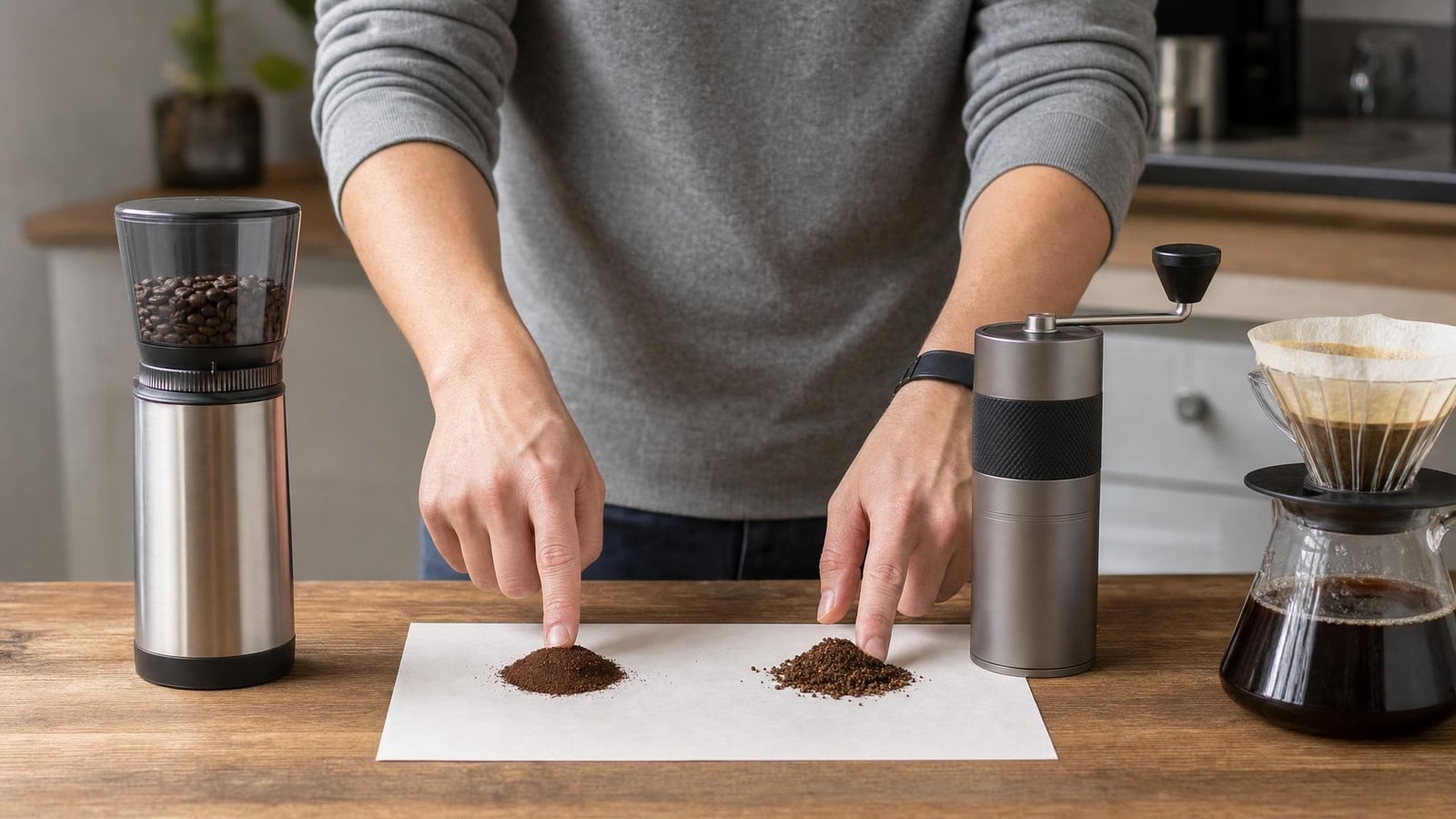
Grind a normal dose at your usual setting and brew it as you normally would. Note whether particles look uneven, whether the cup tastes consistently too bitter, sour, weak, or variable, and whether you can make a small setting change and reproduce the result. Do not treat one imperfect brew as proof that the grinder is the cause; dose, water, coffee age, and brewing technique also affect extraction.
Clean and retest before replacing it
Empty retained grounds, brush out the grind path where accessible, and retest with the same coffee and recipe. Old grounds can make a fresh dose less predictable. If cleaning and a measured adjustment produce a satisfactory, repeatable cup, keep the current grinder.
Compare the controls that affect daily use
If the result remains inconsistent, compare candidate grinders by adjustment control, retained grounds, noise, cleanup effort, and how easily you can repeat a chosen setting. Burr grinders are a useful format to compare when you want controlled adjustments, but burrs alone do not guarantee the same outcome across every brew method. Confirm that the adjustment range suits your intended brewing before treating any model as a solution.
Choose countertop or portable storage deliberately
Choose a countertop format when a fixed brewing station and repeatable access are more important than compact storage. The AMZCHEF conical burr coffee grinder is a countertop burr format to compare for that use case. Choose a portable format when small batches and storage flexibility are more important. The OutIn Fino portable electric burr grinder is a portable burr format to compare for that use case. Neither format automatically improves coffee if the current grinder already delivers adequate measured results.
Make a keep-or-change decision
Keep the current grinder when it reaches the settings you need, produces an adequate and repeatable result after cleaning, and fits your workflow. Change grinders when you have identified a recurring limitation—such as insufficient usable adjustment control, inconsistent repeatability, impractical cleanup, or a storage mismatch—that persists after controlled testing. An alternative to replacing the grinder is simplifying to one brew method, using a consistent dose and recipe, or adjusting the brew variables you can already control.
Recommendations in detail
Match each option to a measured problem
Recommendation 1
AMZCHEF conical burr coffee grinder
A countertop burr grinder for comparing repeatable settings across several brew methods.
- Best for
- A fixed coffee station where selectable grind settings justify the footprint.
- Strongest benefit
- A burr mechanism represents the adjustment-led side of the comparison.
- Main limitation
- The countertop body requires dedicated space and retained-setting cleanup.
Pros, cons, evidence, and when to skip
Skip if
- You need only occasional basic grinding and will not use selectable settings.
Evidence references: Current Lasso product-data identity, tagged destination, and authorized exact-product media readiness were verified for AMZCHEF conical burr coffee grinder.
Recommendation 2
Fellow Ode Gen 2 flat burr grinder
A single-dose flat-burr format for filter-coffee workflows at a fixed station.
- Best for
- A countertop setup prioritizing repeatable filter-grind adjustment and low retained dose.
- Strongest benefit
- It adds a distinct single-dose flat-burr use case to the burr side of the comparison.
- Main limitation
- The countertop format and filter-focused range are a poor fit for occasional or blade-style simplicity.
Pros, cons, evidence, and when to skip
Skip if
- You need an inexpensive occasional grinder or a blade grinder for non-coffee spices.
Evidence references: Current Lasso product-data identity, tagged destination, and authorized exact-product media readiness were verified for Fellow Ode Gen 2 flat burr grinder.
Recommendation 3
Hamilton Beach Fresh Grind electric coffee grinder
A blade grinder format for occasional simple grinding at lower complexity.
- Best for
- Occasional users comparing compact blade operation with burr adjustment.
- Strongest benefit
- It honestly represents the blade side: simple pulse-controlled grinding rather than calibrated settings.
- Main limitation
- Blade timing produces a less controlled particle-size distribution and needs user judgment.
Pros, cons, evidence, and when to skip
Skip if
- Repeatable espresso or pour-over adjustment is central to your routine.
Evidence references: Current Lasso product-data identity, tagged destination, and authorized exact-product media readiness were verified for Hamilton Beach Fresh Grind electric coffee grinder.
Alternatives and no-buy options
When none of these products is appropriate
- Use the no-purchase baseline described in this guide before adding another burr grinder vs. blade grinder: which fits your routine? product.
- Borrow or use an existing tool for one representative week and count setup, cleanup, storage, and compatibility as part of the decision.
Final recommendation
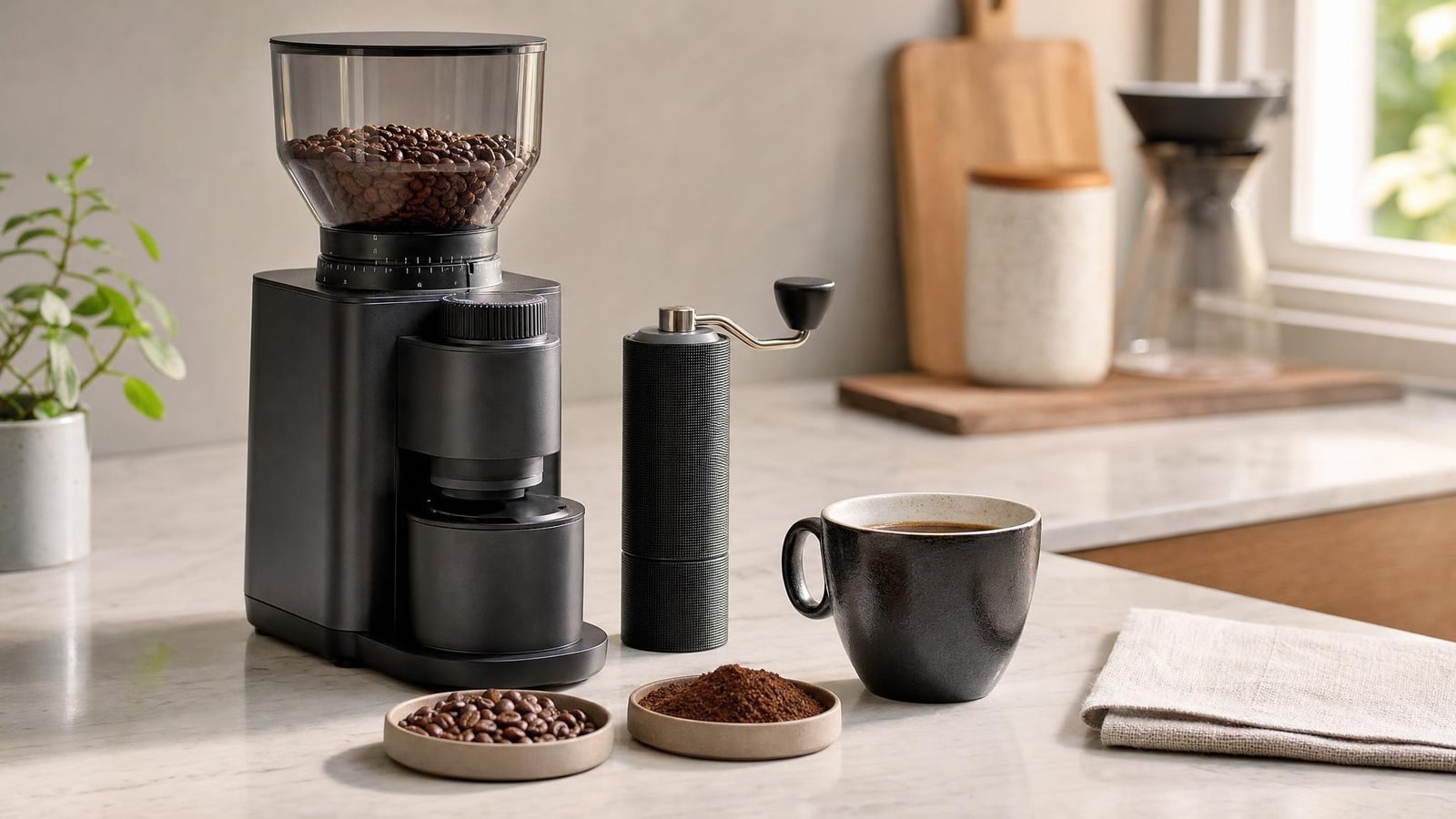
Choose the smallest system that solves the measured problem
Use the no-buy baseline first, then choose only the format whose tradeoffs fit the recurring task.
View on Amazon