

Travel & Organization · how to
How to Choose Luggage Organizer Bags Without Overpacking
A measured packing-zone plan, a no-buy trial with bags already at home, and three organizer formats to compare only if they solve a remaining access problem.
A suitcase becomes harder to use when loose items overlap, clean and damp gear mingle, or the item needed first is buried. Create measured packing zones and assign each zone a retrieval purpose; packing cubes can help, but folded clothing, pouches, and bags already at home can do the same job.
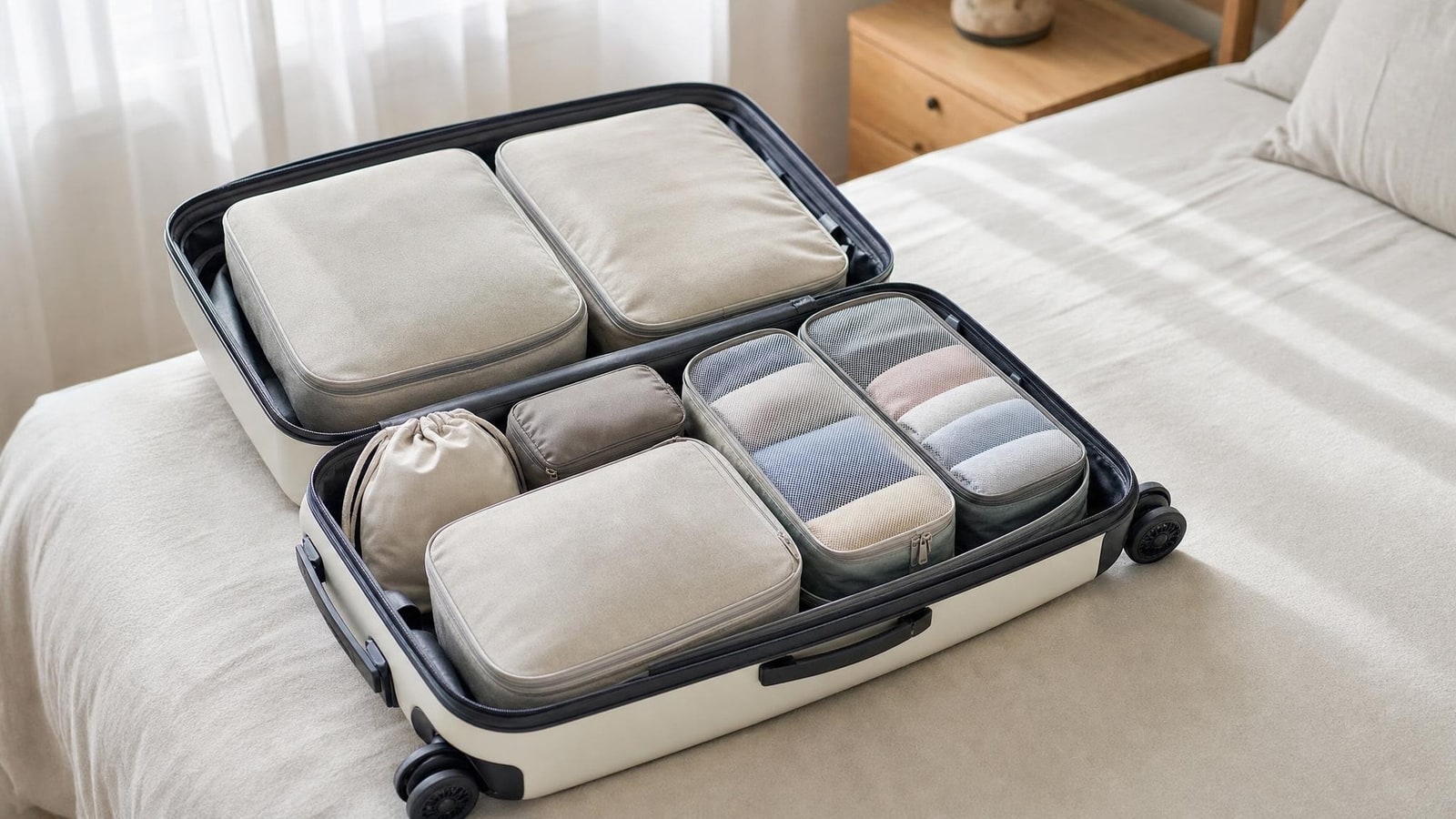
Quick product guide
Products featured in this guide
Bago seven-piece packing cube set
Best for: Travelers who want several cube sizes plus small zip bags.
Limitation: Seven pieces add sorting and storage overhead when the trip needs only one or two zones.
View on AmazonShacke five-piece packing cube set
Best for: Travelers who prefer fewer, larger clothing zones.
Limitation: Compression is limited and the set still consumes space when stored between trips.
View on AmazonHERO five-piece packing cube set
Best for: Trips where clean-versus-worn separation matters more than adding many cube sizes.
Limitation: The additional bags and cubes add storage and zipper management without creating luggage capacity.
View on AmazonBefore you start
Start with an empty suitcase, the actual items for the trip, and a few bags or organizers. Measure usable interior space, prioritize what must be reached first, then test a layout before committing to additional organizers.
- Empty suitcase or travel bag
- Actual packing list
- Measuring tape or ruler
- Bags, pouches, or organizers already available
- Optional packing cubes or zip bags
Step by step
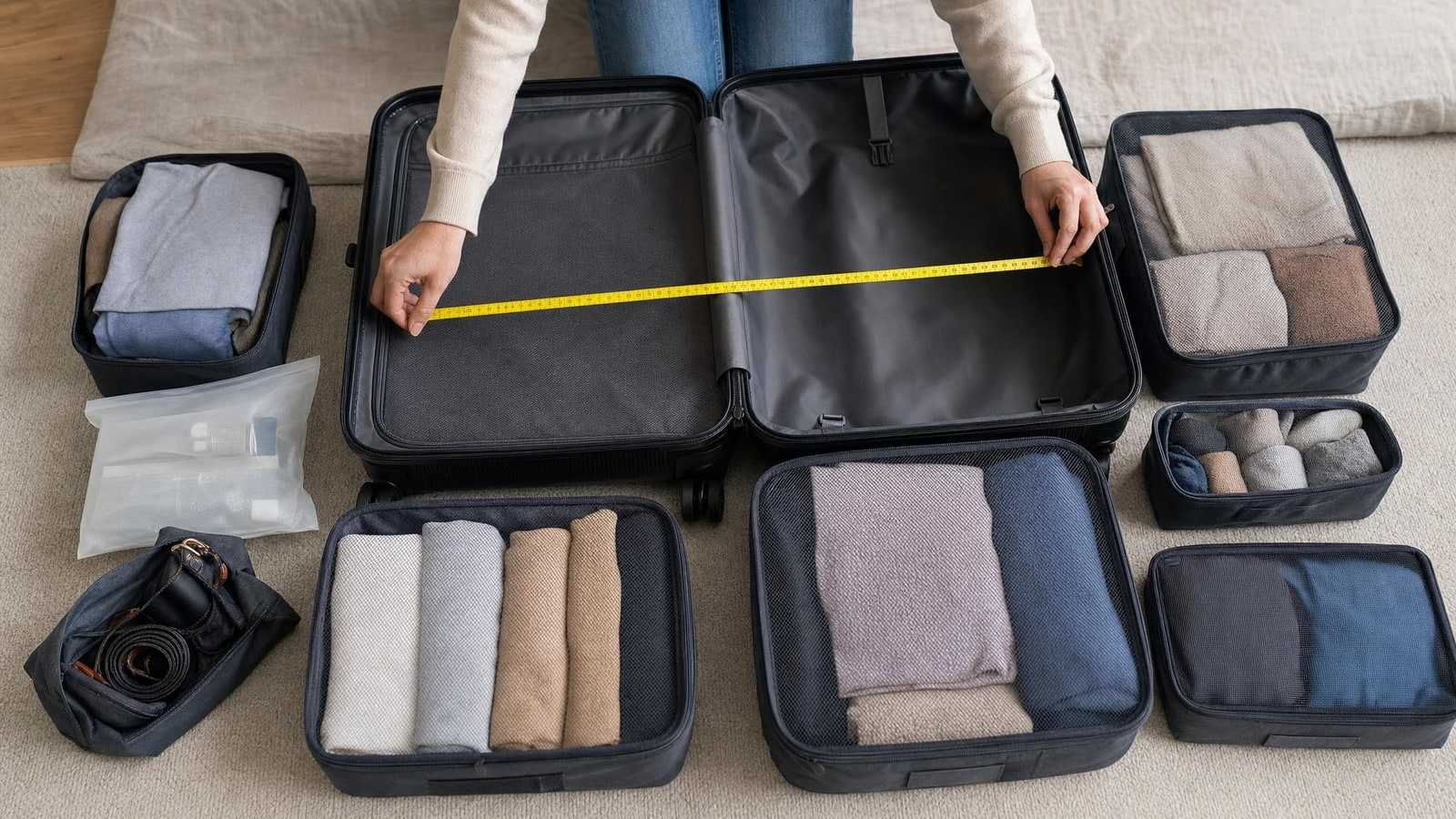
Measure the usable suitcase interior
Measure the main compartment’s length, width, and depth, accounting for wheel housings, handles, dividers, and lid space. Note rigid items and any airline or trip-specific constraints. These measurements define the zones an organizer must fit rather than forcing the suitcase to fit the organizer.
Sort the actual packing list by access
Make groups based on when items are needed: arrival essentials, daily clothing, sleepwear, toiletries, laundry or damp items, and small accessories. Keep frequently needed items near the opening or in an easy-to-lift group; place backup clothing and less-used items deeper in the case.
Run a no-buy zone test
Use folded clothing, reusable bags, toiletry pouches, or other bags already at home to form the proposed groups. Pack, close the suitcase, reopen it, and retrieve one item from each group. Adjust group boundaries if retrieval disturbs the rest of the case.
Compare organizers only against the measured zones
If the no-buy test shows a real need, choose organizer sizes that fit the measured spaces and the clothing groups. The Bago seven-piece packing cube set suits mixed-size clothing and small-item zones. The Shacke five-piece packing cube set suits visible mesh clothing groups and straightforward suitcase retrieval. Bago packing cubes with zip bags suit trips where clothing needs separation from damp or small items. A set is not automatically better: use only pieces that match a specific zone.
Pack by zone, not by empty container
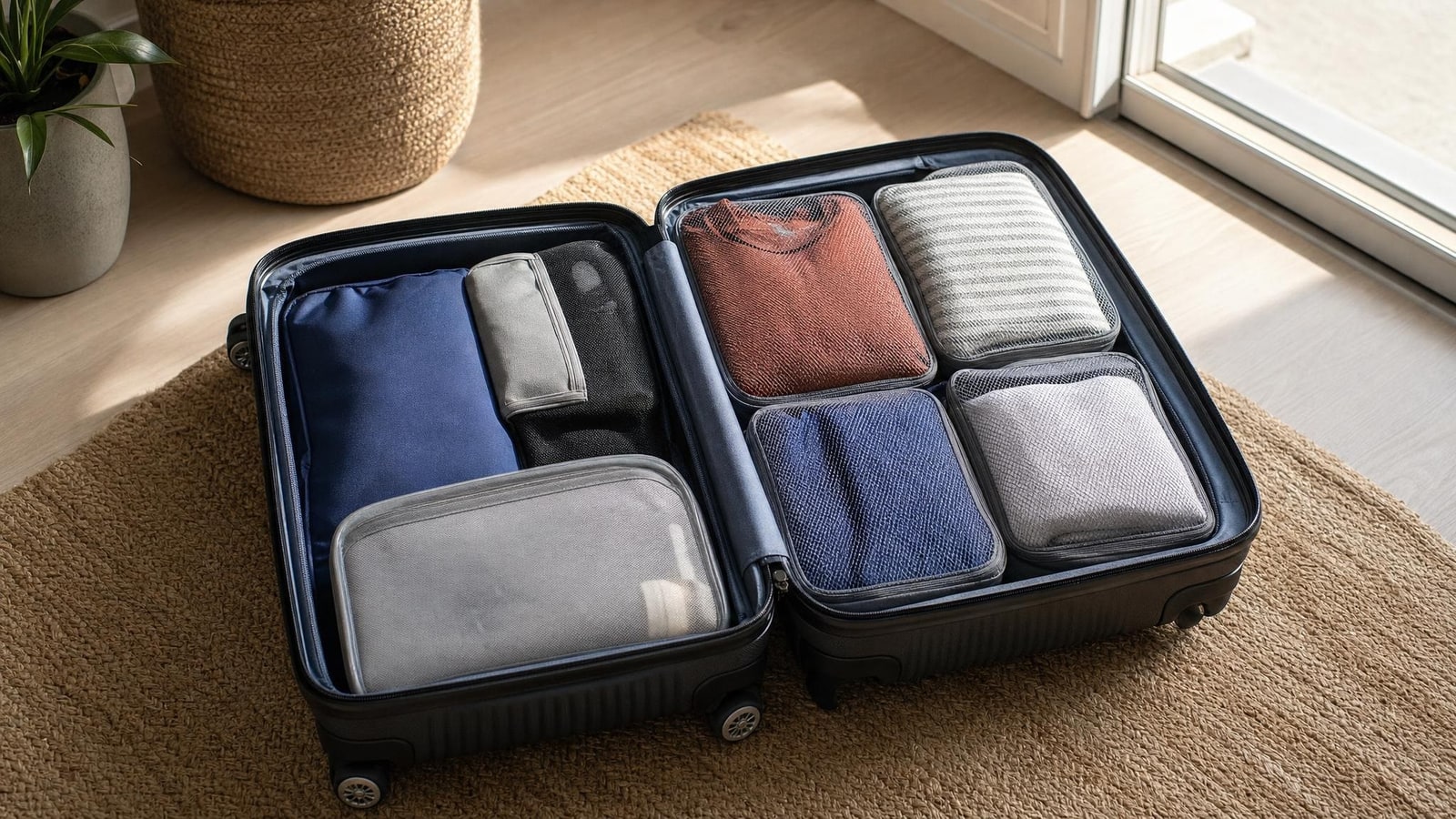
Fill each chosen bag or cube with one defined category, leaving enough room to zip without excessive compression. Put soft, flexible groups around awkward suitcase features. Keep toiletries and potentially damp items separately contained, and reserve a small accessible space for documents, medication, or arrival essentials if needed.
Remove organizers that do not improve retrieval
Close and carry the suitcase, then test opening it and retrieving key items. Remove any cube or bag that adds bulk, creates dead space, or requires unpacking multiple groups to reach one item. The final setup should make each group easier to locate, not merely make the case look more orderly.
Troubleshooting
The suitcase will not close after adding cubes.
Reduce duplicate layers and rigid containers first. Repack with fewer, larger clothing groups or use ordinary bags; organizers cannot create additional suitcase volume.
Cubes leave awkward gaps around wheels or handles.
Place flexible clothing or soft bags in irregular spaces and reserve rectangular cubes for the largest flat areas. Do not force a cube into a zone it does not fit.
Finding clothing still requires opening several cubes.
Re-sort by access frequency rather than garment type alone. Put the first-day outfit and arrival essentials in their own accessible group.
Damp items affect clean clothing.
Use a dedicated washable or sealable bag for damp items. If no separate bag is available, keep damp items outside the main clothing zone until they can be dried or laundered.
The organizers add weight or bulk without helping.
Return to the no-buy layout with folded clothing and existing bags. Use fewer organizers, or none, when the suitcase already provides enough separation.
Quick final check
- Usable suitcase dimensions and obstructions are identified.
- Packing groups are based on access needs, not only item type.
- The layout was tested with available bags or folded clothing before adding organizers.
- Each organizer or bag has one clear retrieval purpose.
- Damp or spill-prone items are separated from clean clothing.
- The suitcase closes and key items can be retrieved without disrupting most of the load.
- Any organizer that adds bulk without improving retrieval has been removed.
Bottom line
The effective packing-cube setup is the smallest set of zones that keeps essential items reachable and prevents unwanted mixing. Existing bags and careful folding are valid alternatives; choose cubes only when they fit measured suitcase space and make retrieval genuinely easier.